

Best Affordable Kids Clothing Brands: 2026
Table of Contents
- Best Affordable Kids Clothing Brands: Quick Comparison
- What Makes Durable Kids Clothing Brands Stand Out
- Budget-Friendly Wardrobe Staples That Withstand Growth Spurts
- Building a Capsule Wardrobe for Kids on a Budget
- Tips for Maintaining Kids Clothes to Extend Their Lifespan
- Resale and Secondhand Options for Maximum Cost-Per-Wear
- How to Shop Smart: Online vs. In-Store for Kids Fashion
- Frequently Asked Questions
Last Updated: September 24, 2026
Best Affordable Kids Clothing Brands: Quick Comparison
Finding affordable kids clothing brands that actually last through growth spurts and active play is harder than it seems. Most budget options fall apart after a few washes.
The real question is whether they'll survive a season. This guide breaks down what makes affordable kids clothing brands worth buying, how to build a wardrobe that grows with your child, and where to find the best value without sacrificing quality.
| Feature | Budget-Friendly Option | Premium Option | Sweet Spot |
|---|---|---|---|
| Cost per wear | Higher (wears out fast) | Lower (lasts longer) | Best value over time |
| Durability | 1-2 seasons | 3-4 seasons | 2-3 seasons |
| Fabric quality | Thin, pilling | Heavy, premium | Balanced construction |
| Growth-friendly fit | Often too tight/loose | More sizing options | Multiple sizes available |
| Resale value | Minimal | Strong | Moderate to good |
What Makes Durable Kids Clothing Brands Stand Out
Durability comes down to three factors: fabric weight, seam construction, and elastic quality. Brands that prioritize these elements save money over time through cost-per-wear calculations.
Heavy-weight cotton holds up better than thin jersey knit. Double-stitched seams survive rough play and repeated washing. Quality elastic doesn't lose shape after 20 washes.
Fabric Weight and Fiber Content Matter More Than Price
Fabric weight is measured in grams per square meter (GSM). Children's t-shirts range from 120 GSM (thin, prone to pilling) to 200+ GSM (durable). Affordable brands often use 140-160 GSM cotton, durable enough for active play but not so heavy it feels stiff. Check product descriptions for GSM ratings; brands transparent about this metric tend to prioritize quality.
Some affordable brands mix 5-10% spandex into cotton, which adds stretch and durability without significantly raising cost.
Polyester-heavy blends (70% polyester, 30% cotton) pill faster and trap sweat, costing more per wear because they wear out in one season. Mid-range affordable brands typically use 60-80% cotton blends.
Certifications That Prove Safety Without Premium Pricing
Two certifications indicate safer manufacturing without requiring premium pricing: GOTS (Global Organic Textile Standard) certifies fabric grown without synthetic pesticides and processed without harmful chemicals. GOTS-certified items cost 10-20% more but are available from affordable brands. OEKO-TEX Standard 100 tests finished garments for 300+ harmful substances. Many affordable brands use OEKO-TEX because it's less expensive to achieve than GOTS. Brands that invest in safety testing typically invest in construction quality too.
Seam Construction: The Most Visible Durability Indicator
Seams are where clothes fail first. Double-stitched seams survive multiple seasons.
Examine product photos for even, tight stitching with no loose threads and reinforced stress points. If buying in-store, run your finger along inside seams, rough or uneven stitching indicates quality issues that will worsen with washing.
Elastic Quality: Why Waistbands Matter
Poor-quality elastic loses elasticity after 10-15 washes. Quality elastic maintains shape through 50+ washes.
Budget-Friendly Wardrobe Staples That Withstand Growth Spurts
Kids outgrow clothes every 3-6 months during peak growth years. Cost-per-wear is the most honest metric: a $30 shirt worn 200 times costs 15 cents per wear, while a $15 shirt worn 50 times costs 30 cents per wear. Focus on neutral-colored t-shirts, durable jeans or play pants, and versatile shoes. Avoid character-licensed clothing that dates quickly.
The Breathable Mesh Kids Sneakers 2026 at $17.81 offer soft soles and non-slip design for all-day wear. The Boys Girls Garden Clogs Beach Sandals at $41.03 are lightweight, waterproof, and easy to slip on and off.


Building a Capsule Wardrobe for Kids on a Budget
A capsule wardrobe cuts costs by buying fewer pieces that work together. Choose 2-3 neutral base colors (white, gray, navy, black) and 1-2 accent colors. Every piece should work with every other piece.
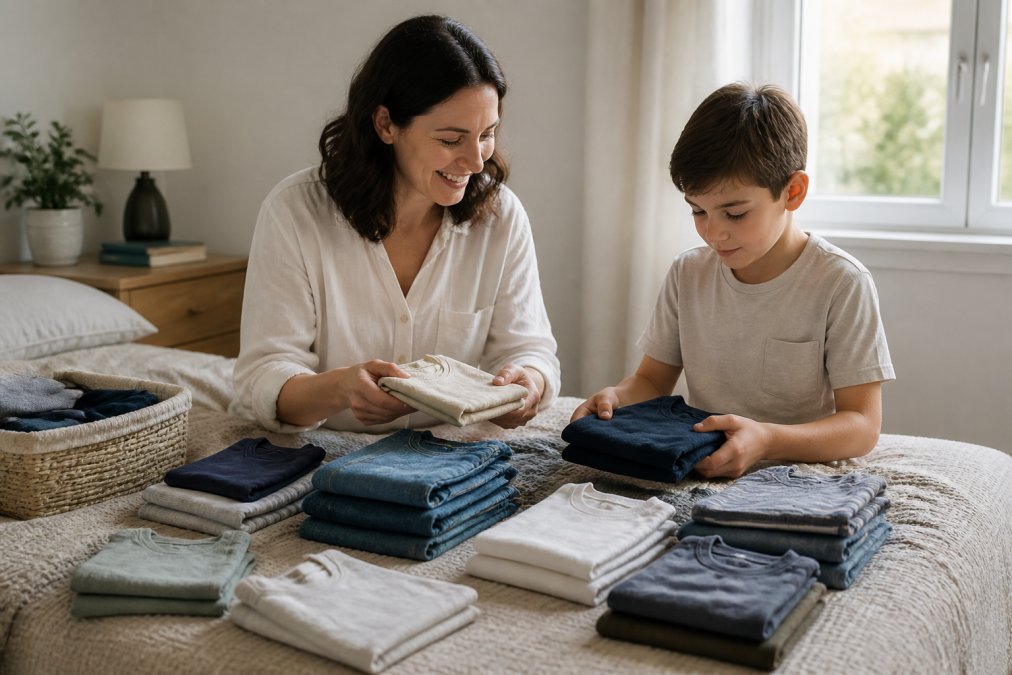
Buy basics first: 5-7 t-shirts, 2-3 pairs of pants, 1-2 pairs of shorts, and 2-3 pairs of shoes. The Kids Casual Shoes Sneakers at $25.64 in white pair with everything. Seasonal rotation extends your budget further, store off-season clothes and rotate them in twice a year.

Tips for Maintaining Kids Clothes to Extend Their Lifespan
How you wash and store kids clothes determines whether they last one season or three. Simple maintenance routines prevent most damage, but not all maintenance efforts are equal. Some practices extend lifespan by months; others make minimal difference. Understanding which is which helps you prioritize effort on pieces worth keeping.
Washing Practices That Actually Extend Durability
Turn clothes inside out before washing. Wash in cold water with mild detergent and avoid fabric softener. Dry on low heat or air dry when possible, high heat shrinks clothes and damages elastic.
Boys Girls Garden Clogs Beach Sandals →
Wash play clothes 2-3 times before washing. Underwear and socks should be washed after each wear. Outerwear can go 5-10 wears between washes.
Use gentle cycle for delicate fabrics and mesh items. Regular cycle is fine for sturdy basics like jeans and heavy cotton t-shirts.
Stain Treatment: The 24-Hour Window
Treat stains within 24 hours. For grass stains, soak in cold water with white vinegar. For mud, let dry then brush off. For fruit and juice, rinse immediately with cold water. For chocolate and grease, treat with dish soap.
Storage: Preventing Damage During Off-Season
Store off-season clothes in breathable containers, not plastic bags. Fold clothes rather than hanging them to prevent stretching. For special occasion clothes, wrap in acid-free tissue paper.
Use cedar blocks or lavender sachets to protect against moths.
Monthly Inspections: Catching Small Problems Before They Become Big Ones
Check seams and elastic monthly. Look for loose threads, elastic losing shape, small holes, pilling, and fading. Keep a simple sewing kit with neutral-colored thread and a needle. Most repairs take 2-3 minutes.
Which Items Are Worth Extra Care
Prioritize careful washing for items with quality seams, pieces that are hard to replace, delicate fabrics, and items you plan to pass down. Basic play clothes can be washed more casually.
Resale and Secondhand Options for Maximum Cost-Per-Wear
The secondhand market for kids clothing has exploded. Used kids clothes often look brand new because children outgrow them before wearing them out. This creates an opportunity to buy high-quality pieces at a fraction of retail price.
Buying secondhand cuts your clothing costs compared to retail. A $30 shirt costs $10 used. More importantly, you can afford to buy better-quality pieces secondhand than you could afford new. This flips the cost-per-wear calculation entirely.
Online resale platforms make buying and selling simple.
How to Shop Smart: Online vs. In-Store for Kids Fashion
Online shopping offers selection and convenience. In-store shopping lets you check fit and quality immediately. The best strategy combines both approaches.
Frequently Asked Questions
What are the best affordable kids clothing brands that actually last?
The best affordable kids clothing brands combine reasonable pricing with durability. Look for options offering breathable fabrics, reinforced seams, and non-slip soles designed to handle active play. Brands that provide sizing charts and clear fabric information help ensure proper fit and longevity. Cost-per-wear matters more than the initial price, a slightly higher-priced item that lasts through multiple children or seasons offers better value than cheaper pieces that wear out quickly.
How do I build a capsule wardrobe for kids without overspending?
Start with 5-7 neutral wardrobe staples: white and navy t-shirts, one pair of jeans, shorts, and a simple dress or two. Choose mix-and-match pieces in organic cotton or breathable mesh that work across seasons. Add 2-3 layering pieces like cardigans. This approach reduces decision fatigue and stretches your budget further. Seasonal essentials like lightweight sandals for summer and one warm layer for winter round out the basics. Focus on quality over quantity, fewer durable pieces beat a closet full of fast fashion alternatives.
What's the most important thing when buying affordable kids clothes?
Check the fabric composition and construction quality first. Breathable materials like combed cotton and mesh prevent discomfort and extend garment life. Look for reinforced seams, non-slip soles on shoes, and secure closures. Read sizing charts carefully, proper fit prevents outgrowing clothes too quickly. Affordable doesn't mean sacrificing durability; many budget-friendly options use the same high-quality materials as premium brands. Prioritize pieces your child will actually wear and that withstand frequent washing and active play.
How can I save money on kids clothes long-term?
Combine three strategies: buy wardrobe staples that mix and match, invest in wash-and-wear pieces that reduce ironing time, and explore the resale market for gently used items. Seasonal sales and clearance shopping stretch your budget further. Track cost-per-wear by dividing the price by expected wears, a durable item worn 100 times costs less per wear than a cheaper item worn 20 times.
What fabric should I look for in affordable kids clothing?
Organic cotton and combed cotton offer breathability, softness, and durability for everyday wear. Mesh materials provide excellent airflow for active play and summer clothing. PU leather and artificial leather options are waterproof and easy to clean, ideal for outdoor gear. Avoid overly stiff or synthetic blends that restrict movement or trap moisture. Check product descriptions for non-toxic certifications and fabric safety information. Breathable materials reduce skin irritation and allow for frequent washing without degrading quickly, a key factor in long-term affordability.