

How to Measure Kids Feet Size: A Parent's Step-by-Step Guide
Table of Contents
- What You'll Need to Measure Kids Feet at Home
- Step-by-Step: How to Measure Kids Feet Size Accurately
- How to Read a Kids Shoe Size Chart
- How Much Growing Room in Kids Shoes Is Enough?
- Signs Kids Shoes Are Too Small (and When to Remeasure)
- Troubleshooting Tricky Feet: Toddlers, Width, and Seasonal Changes
- Choosing the Right Shoes for Growing Feet
- Frequently Asked Questions
Last Updated: September 26, 2026
What You'll Need to Measure Kids Feet at Home
- A piece of paper larger than your child's foot
- A pencil or pen
- A ruler or tape measure
- A flat wall or hard floor surface
- A chair for your child to sit on
The steps below work for babies, toddlers, and kids up to age six.
Step-by-Step: How to Measure Kids Feet Size Accurately
Measuring kids feet takes three steps: prepare the foot and paper, trace and mark heel-to-toe length, then measure both feet and use the longer number.
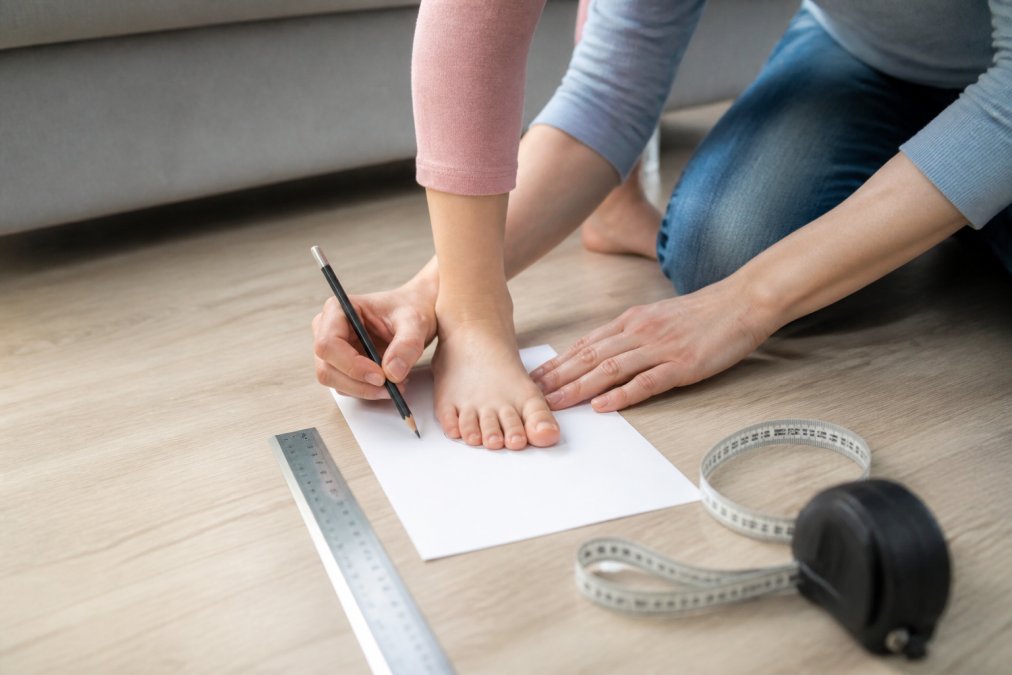
Step 1: Prepare the Foot and Paper
Have your child stand barefoot on the paper with full weight on both feet, standing spreads the foot to its true length. Place the paper against a wall so the heel can touch it. If your child won't stand still, sit them down and press the foot flat yourself.
Step 2: Trace the Foot and Mark Heel-to-Toe
Hold the pencil straight up and down and trace around the whole foot against the skin. Mark the back of the heel and the tip of the longest toe, usually the big toe, but not always, so check.
Step 3: Measure Both Feet and Record the Longer Length
Measure from heel mark to toe mark in centimeters. Repeat on the other foot, one foot is often slightly longer, which is normal. Always buy for the longer foot; ignoring a few millimeters means one shoe will pinch.
How to Read a Kids Shoe Size Chart
A kids shoe size chart converts your child's foot length in centimeters into a shoe size. It's the only reliable way to pick a size, because labels vary between brands and countries. How to use one:
- Find your child's foot length in centimeters on the chart
- Match it to the size range that includes that number
- Check whether the chart lists inner length or foot length, they are not the same
- When you're between sizes, size up
Foot Length vs. Inner Length vs. Last Length
Three different numbers get called "size" on kids shoe listings, and mixing them up is the most common reason a shoe arrives too small:
- Foot length is what you just measured, heel to longest toe, in centimeters.
- Inner length is the usable space inside the shoe, measured heel to toe on the insole. It is always longer than foot length by the amount of growing room the brand builds in.
- Last length is the length of the mold the shoe was built on. It is a manufacturing number, not a fit number, and it should not be used to pick a size.
Why the Same Size Number Means Different Things Across Brands
A EU 22 from one brand is not the same physical length as a EU 22 from another. There is no enforced standard for children's footwear sizing, so two shoes marked "US 8 toddler" can differ by half a centimeter or more. Use the chart for the specific shoe you're buying, and always compare in centimeters rather than size numbers.
A Quick Conversion Reference
If you only have a US or UK size and need a rough centimeter equivalent, these are the commonly cited conversions for kids:
| US Toddler/Kids | UK | EU | Approx. foot length (cm) |
|---|---|---|---|
| 4T | 3 | 20 | 11.5 |
| 5T | 4 | 21 | 12.3 |
| 6T | 5 | 22 | 13.1 |
| 7T | 6 | 23 | 13.9 |
| 8T | 7 | 24 | 14.7 |
| 9T | 8 | 25 | 15.5 |
| 10T | 9 | 26 | 16.3 |
How Much Growing Room in Kids Shoes Is Enough?
The right amount of growing room in kids shoes is roughly 0.5 to 1 centimeter beyond your child's foot length, about a thumb's width between the longest toe and the front of the shoe. Less and the shoe rubs; more and the foot slides, causing blisters and trips. It also depends on the shoe type:
| Shoe Type | Growing Room | Why |
|---|---|---|
| Sneakers | 0.5-1 cm | Everyday wear, foot stays put |
| Sandals | 1-2 cm | Open design, foot shifts more |
| Winter boots | 1-1.5 cm | Room for thicker socks |
Signs Kids Shoes Are Too Small (and When to Remeasure)
Signs kids shoes are too small show up fast, often within weeks during a growth spurt:
Breathable Mesh Kids Sneakers 2026 →
- Your child curls their toes when you put shoes on
- They complain about pressure points or rubbing
- You see red marks on the top or sides of the foot
- They walk differently or avoid running
- The toe area feels tight when you press it
Troubleshooting Tricky Feet: Toddlers, Width, and Seasonal Changes
Some feet are harder to measure than others. Toddlers who won't stand still, wide feet, and seasonal changes all need a slightly different approach.
Measuring a Toddler Who Won't Stand Still
The standing measurement is the accurate one, but a two-year-old does not care about accuracy. Approaches that work:
- Measure during a preferred activity. Put the paper on the floor during snack time, screen time, or while they are absorbed in a toy. Trace fast, refine later.
- Trace the insole of a shoe that already fits. Pull the insole out of a well-fitting shoe and measure it heel to toe. That number is the inner length, which is what you actually need for the chart.
- Do one foot per session. Trying to get both feet in one sitting usually fails. Get the longer foot today, the other tomorrow.
- Use the wall trick. Have them stand with their heel against a wall and a book pressed flat against the longest toe. Mark the floor at the book's edge. No tracing required, and many toddlers tolerate it better.
- Two-adult method. One adult holds the paper and child steady, the other traces. If you have a partner or older sibling available, this is the fastest route.
Why Fit Matters Beyond the Next Growth Spurt
Most guides frame fit as a sizing problem. It is also developmental. Children's feet are largely cartilage at birth and ossify gradually, which is why pediatric foot-health guidance emphasizes roomy toe boxes and flexible soles. A shoe that's too narrow or short can restrict how toes splay during push-off, part of how a child learns to balance and walk.
A few practical implications:
- Toe splay matters. Toes spread to grip and balance. A narrow toe box limits that, especially in the 1-4 age range when gait is still developing.
- Rigid soles slow learning. Toddlers learning to walk need to feel the ground and bend the foot naturally. Stiff soles interfere with that feedback loop.
- Arch support is not the goal in early years. Most young children have flexible flat feet that resolve on their own. Overly structured shoes can mask normal development rather than support it.
- Hand-me-downs wear unevenly. A shoe molded to an older sibling's gait may not match the younger child's foot shape, even if the length is right.
Wide Feet, Narrow Feet, and High Insteps
Width is the most ignored measurement in kids shoe shopping, and the most common cause of "the length is right but they still hurt."
- Measure width at the ball of the foot, across the widest part, while standing. Compare that number to the shoe's listed width if the brand provides one.
- High insteps make it hard to get the foot into the shoe even when length and width are fine. Look for adjustable closures and a higher vamp opening.
- Narrow feet slide forward in wide shoes, which causes toe stubbing. Lace-up or strap closures that tighten across the instep help.
- If the two feet differ by more than half a size, fit the larger foot and add a thin insole to the smaller shoe. This is a common fix that most parents never hear about.
Seasonal Changes and Sock Thickness
Feet don't change size with the seasons, but the space they need inside a shoe does, because socks do.
- Summer sandals: thin or no socks. Measure barefoot and add the sandal's recommended growing room.
- Fall and spring sneakers: typical cotton socks add roughly 1-2 mm of thickness. Measure with the socks your child will actually wear.
- Winter boots: thick wool or fleece socks can add 3-5 mm. A boot that fits in July may be tight in January with the same foot.
Choosing the Right Shoes for Growing Feet
The best shoes for growing feet have three things: a flexible sole, a wide toe box, and a secure closure. Everything else is preference. Look for:
- Flexible sole that bends at the front third of the shoe, where the foot naturally bends
- Wide toe box so toes can spread and wiggle
- Adjustable closure like hook-and-loop straps, so the fit tightens as needed
- Breathable upper to keep feet dry during active play
- Non-slip tread for grip on all surfaces
Frequently Asked Questions
How do I measure my child's shoe size at home?
Have your child stand on a sheet of paper with their heel against a wall. Trace around their foot, then measure from the heel mark to the longest toe using a ruler. Measure both feet and use the longer measurement. Add 0.5 to 1 cm of growing room, then match that total to a kids shoe size chart to find the right size.
How much room should be in a child's shoe for growth?
Aim for 0.5 to 1 cm (about a thumb's width) between the longest toe and the front of the shoe. This gives enough space for toe wiggle room and natural growth without causing tripping or discomfort. Shoes that are too roomy can cause blisters and poor walking, so check the fit every 8 to 12 weeks.
How often should I measure my child's feet?
Measure every 8 to 12 weeks for children under 6, since growth spurts can change foot length quickly. Always measure before buying new shoes and check the fit of current shoes monthly by pressing the toe area. If your child complains of pressure points or you notice them curling their toes, remeasure right away.
What are the signs kids shoes are too small?
Watch for your child refusing to wear certain shoes, tripping more often, or complaining of sore toes. Check for red marks or blisters on the heel and toes, and look for toes pressing against the front of the shoe. If the shoe leaves no gap at the toe or feels tight across the widest point, it is time for a bigger size.